Why Turkey became a major hair-transplant destination—and why the choice is not automatically right for you
Turkey has built a large international medical-tourism infrastructure around hair restoration. Concentrated experience, lower operating costs, and package convenience can make a hair transplant in Turkey attractive to U.S. patients. A typical package may combine the procedure with hotel accommodation, airport transfers, medication or care supplies, and follow-up support.
But high procedure volume and a low price do not prove that a particular surgeon will provide good care. Traveling abroad also makes postoperative assessment, complication management, and legal recourse more difficult if something goes wrong after you return home.
A transplant moves your own follicular units—usually from the back and sides of the scalp, called the donor area—to thinning or bald areas, called the recipient area. It redistributes existing follicles; it does not create new ones. Transplanted follicles are generally resistant to the pattern of loss that affected the donor area, but untreated native hair can continue thinning. A sensible plan therefore protects donor supply and anticipates future loss rather than treating only the bald area visible today.
Start with your hair loss diagnosis, not a graft quote
Candidacy depends on the cause and stability of your hair loss, donor supply, scalp health, overall health, and expectations—not age alone. Androgenetic alopecia is a common reason for transplantation, but sudden or diffuse shedding needs investigation before surgery. Diffuse unpatterned loss can make the donor area unreliable, while active alopecia areata, uncontrolled medical conditions, and some inflammatory or scarring scalp disorders can make transplantation unsuitable.
Women and people with curly or coily hair need the same diagnostic discipline. The assessment should consider diffuse loss, traction loss, curl direction, transection risk, and any history of keloid scarring. Curved follicles beneath the skin can make extraction technically more demanding.
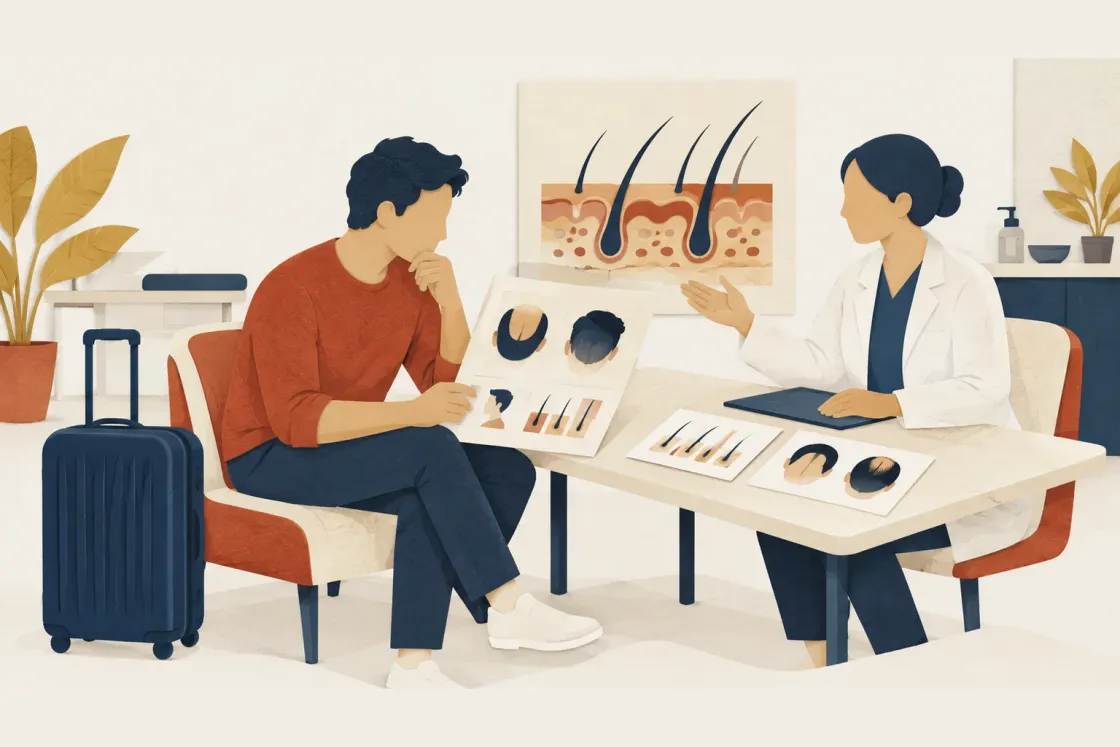
An online photo assessment can estimate likely needs and help with initial screening, but it cannot replace an examination and medical consultation. Before a clinic proposes a session, ask for a diagnosis, donor assessment, realistic density estimate, discussion of future native-hair loss, and alternatives such as medical treatment or delaying surgery.
FUE, DHI, and Sapphire FUE: what changes—and what does not
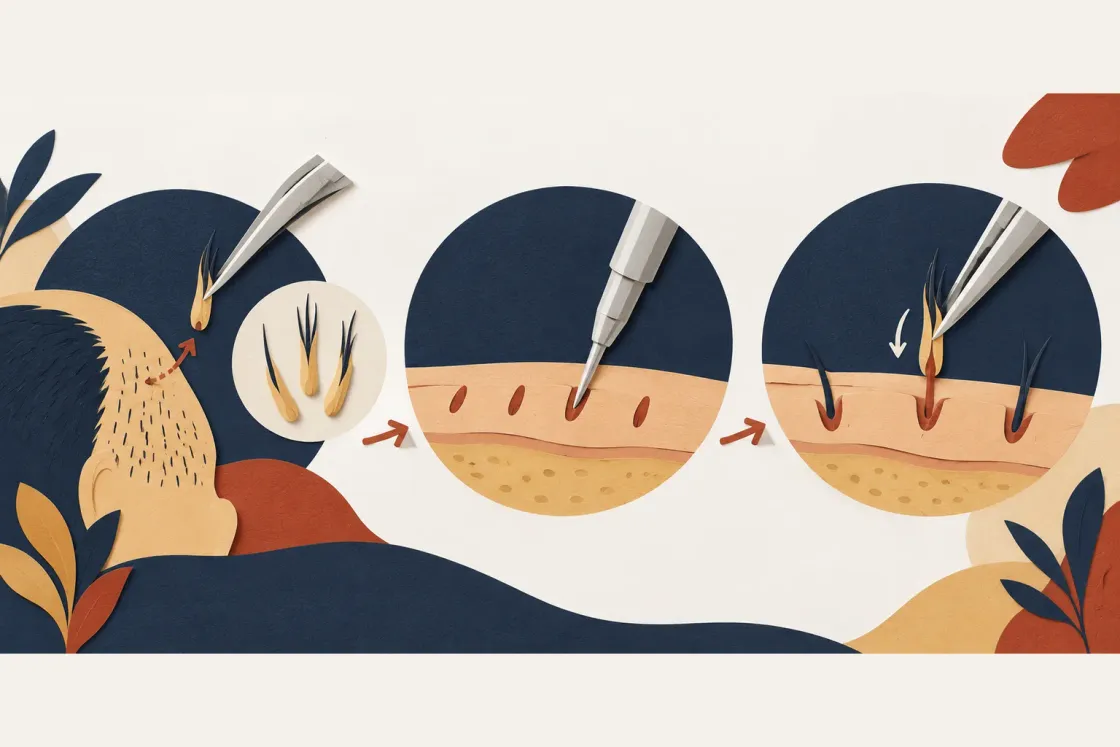
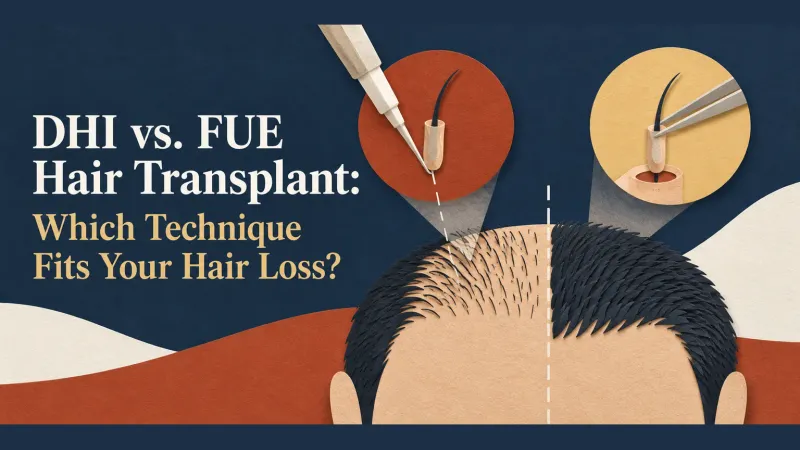
FUE extracts individual follicular units rather than removing a strip of scalp. After extraction, the team creates recipient sites and implants the grafts. DHI uses an implanter pen, often a Choi-style pen, to place extracted grafts into the recipient area. Sapphire FUE is FUE extraction followed by recipient-site creation with sapphire-tipped blades or instruments.
These labels describe instruments or placement methods, not a guarantee of better growth. DHI may help with targeted placement or preserving existing hairs in selected cases, but it is not automatically better for every patient. Sapphire instruments do not, by themselves, make extraction safer. All three approaches depend on viable graft handling, appropriate placement, hairline design, and donor management.
The appropriate method depends on your recipient area, graft number, hair characteristics, donor supply, and the surgeon’s plan. We would be cautious about any consultation that presents a branded technique as universally superior or promises a fixed success rate without examining your anatomy.
The number that matters is the sustainable graft plan
A graft, or follicular unit, can contain one or more hairs. Single-hair grafts are typically used at the leading edge of the hairline to create a softer transition, while multi-hair grafts help build density behind it. A written plan must state whether its number refers to grafts extracted or grafts implanted; those figures are not necessarily identical.
A large session is not automatically a better session. The safe number depends on donor density, hair caliber and texture, the recipient area, blood supply, procedure length, and long-term planning. An extracted follicle does not regrow in the exact spot from which it was removed. Over-harvesting can visibly thin the donor region and reduce your options for future treatment.
Extensive baldness may require staged procedures rather than one aggressive mega-session. A conservative hairline and a reserve of donor follicles matter because non-transplanted hair can continue to thin. Ask the clinic to show how the proposed graft distribution addresses both your current appearance and possible future loss.
How to vet a Turkish clinic when the package looks similar to every other package
Start by verifying the named surgeon’s license and training, the facility’s authorization, and any accreditation. The Turkish Ministry of Health regulates authorized healthcare facilities and health-tourism providers. Accreditation can provide information about facility processes, but an accreditation logo does not prove that a particular doctor will perform your operation.
Ask in writing who evaluates you, designs the hairline, extracts grafts, opens recipient sites, and implants them. Some high-volume clinics use technicians for substantial parts of extraction or implantation, so a consultant’s assurances are not enough. Ask how the facility handles sterilization, single-use instruments, infection prevention, emergency transfer, and the recording of extracted and implanted grafts. You should speak directly with the operating doctor before paying and receive a written plan covering diagnosis, donor limits, expected density, future loss, risks, technique, graft count, and follow-up.
Warning signs include an unnamed operator, pressure to book, a quote that expires quickly, guaranteed growth percentages, unusually large graft promises, edited before-and-after images, and no clear emergency or revision policy. Judge results independently rather than relying only on images selected by the clinic: look for approximately 12-month follow-ups with comparable angles, lighting, hair length, and multiple views, and ask whether the cases match your pattern and hair characteristics. The clinic should explain what happens if you develop infection, poor growth, excessive scarring, or an unnatural hairline after returning to the United States.
What a Turkey package includes—and the costs it may leave to you
Many all-inclusive hair-transplant packages in Turkey are priced around $1,500–$5,500. A commonly quoted package may include the procedure, three or four hotel nights, airport and local transfers, medication, and a postoperative care kit. Flights are commonly separate.
An unusually low quote deserves scrutiny because it may reflect limited doctor involvement, a high-volume operating model, a lower standard of facility support, a smaller or unclear graft allowance, or important services left out of the headline price. A low number is not proof of poor care, but it is a reason to ask exactly who performs the surgery and what you would pay if the plan changes. The quote can also change with graft number, technique, surgeon involvement, facility, accommodation, and added treatments.
The package may exclude flights, extra nights, companion costs, upgraded medication, revision surgery, treatment of complications, local U.S. evaluation, or U.S.-based medical care. Your full trip budget may also include meals, travel insurance, currency or payment fees, and time away from work. Compare like with like and request the currency, taxes, payment method, deposit terms, cancellation and refund policy, package inclusions, exclusions, and revision policy in writing.
The four-day trip is short; the recovery and result are not
A typical international patient itinerary lasts about three to five days. Arriving before surgery gives you time for logistics and rest. The operation commonly takes about four to ten hours under local anesthesia, so you remain awake while the scalp is numb. Clinics often schedule the first wash and a check before departure.
Redness, swelling, itching, and scabbing are common early effects; swelling can extend toward the forehead or eyelids. Transplanted hair shafts commonly shed during the first weeks while the follicles remain in the scalp. New growth commonly begins around three or four months, and the result is usually assessed around 12 months, with some areas maturing later.
Follow the medical team’s instructions for gentle washing, protecting grafts from friction and sun, and avoiding smoking and alcohol around surgery as directed. Before traveling, arrange for a U.S. clinician if you have medical risk factors or want local postoperative support. Confirm how remote follow-up works and where you should go if symptoms become urgent.
The questions to ask before you send a deposit
Use your consultation to obtain a written diagnosis, graft plan, technique recommendation, price, inclusions, exclusions, and aftercare plan. Ask:
- Is the quoted number grafts extracted or grafts implanted, and what is the maximum safe session for my donor area?
- Which named doctor will be present, and which parts of surgery will that doctor perform?
- Who designs the hairline, creates recipient sites, extracts grafts, and implants them?
- How will unused or damaged grafts be handled, and how will future native-hair loss be managed?
- Is medical treatment appropriate before or after surgery?
- Which facility will be used, and what is the emergency plan?
- What do the package price and payment terms include, and what happens if I cancel?
- When is the first wash, how does remote follow-up work, and who evaluates complications after I return to the United States?
- What is the process and cost for poor growth, an unnatural hairline, scarring, or revision?
A good answer may be a recommendation to delay, treat the underlying loss, or stay in the United States.